
Who I am
Welcome to Herbal Cabinet!
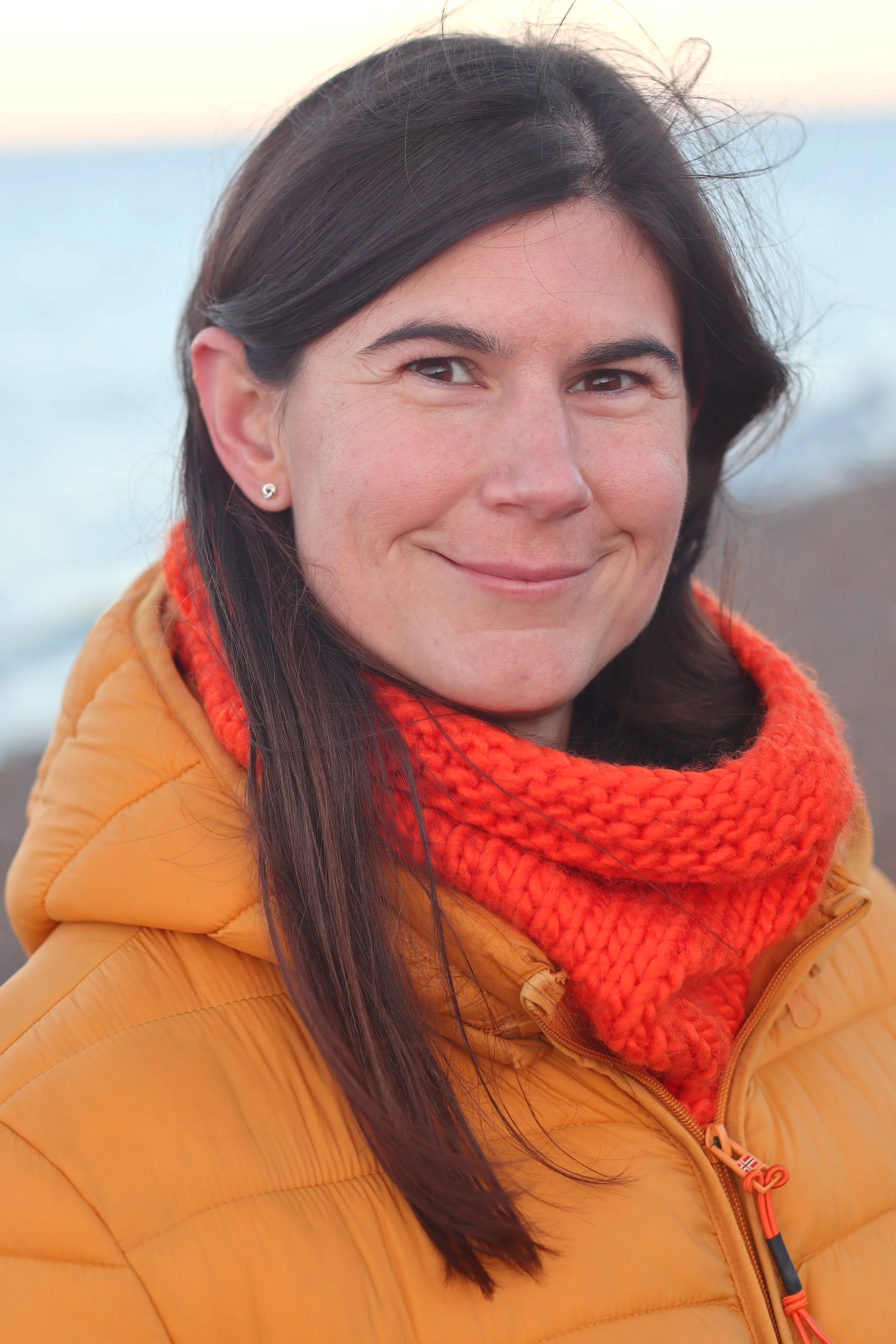
My name is Lisa Poggi and I am your herbalist. I am originally from Italy and have lived in the UK since 2010. For my entire childhood my mum gave me and my brother herbal and homeopathic remedies; as I grew up I began to realise I was pretty much the only person taking those and was questioned a lot about how and if they worked. This is why, when I finally had some time on my hands, I decided to learn about Herbal Medicine.
I studied for 5 years with Heartwood Education, I first signed up to the Foundation Course in 2020 and the passion it sparked in me led me to enrol in the Professional Course. I am now a fully qualified herbalist with an equivalent to BSc level Diploma in Herbal Medicine and am a member of the National Institute of Medical Herbalists.
I love nature and animals, as well as travel and I can offer consultations outside of standard office hours.
My approach
I will merge the folklore and ancient wisdom passed on from generation to generation with the latest scientific research regarding herbs, their constituents and how they interact with your body as every prescription will be unique to each patient.
Why have a consultation?
The first consultation will last up to 90 minutes, as we will go through your medical journey through life. Together we will gather the reason behind your symptoms because, to quote the father of medicine, "it is far more important to know what person has the disease than what disease the person has" (Hippocrates). Everything within our body is interconnected as we are made of a multitude of systems which interact with one another and, at times, a symptom can lead us astray from its origin. A consultation with me will be a deeper analysis of your whole person, which will go beyond the conventional diagnosis and will result in a unique, person-centred, herbal prescription.
What does herbal medicine offer?
Petrovska (2012) explains how healing with medicinal plants is as old as mankind itself, and animals have been self-medicating using plants since the dawn of time. However, we find ourselves in a heavily nature-disconnected era where everything is designed to keep us in a controlled environment and one pill can fix everything. This has led our generation to forget about the wonders of the natural world and to stop listening to our own bodies' requests, following a rhythm that is unsustainable.
Herbal medicine not only gives you practices to re-connect with nature and yourself, but it gives you a unique medicine that will activate a physical, quantifiable, healing response in your body aimed at achieving equilibrium within our body known as homeostasis (Ralph and Tassell, 2020).
How does it work?
Plants make what we call phytochemicals, which literally means "chemicals produced by plants". These are the active compounds that not only give flavour and colour to a plant, but also act as a defence system against pathogens, radiation, stress etc.
Herbalists extract these active compounds as a whole plant extract; they have patterns and shapes made of atoms and chemistry teaches us that atoms interact and form relationships with one another (Ganora, 2021). Deniz and Sevim (2025) explains to us how, when we use herbal medicine, these chemical bonds take place, and the pattern of energy which was informed by the plant is taken into ours and activates a physical, quantifiable, healing response. Co-evolution with many edible and medicinal plants has altered our genetics allowing us to tolerate them to a greater degree than would be otherwise expected of mono-chemical drugs; furthermore, whole-plant extracts often demonstrate synergy, leading to better results than demonstrated by single active constituents often found in orthodox medicine (Ganora, 2021).
What about orthodox medicine?
Orthodox medicine can save lives, however we have become accustom to taking drugs for any complaint independently of how small it might be. We run to the pharmacy for any pain, cold or insomnia we might be experiencing and although the pills we end up buying can act extremely quickly because of a very targeted approach, they come with side effects which can lead us to take more medications which come with more side effects and so forth.
This is where herbal medicine comes into effect : depending on your specific case, herbal medicine can be taken in order to ease off a drug, come off it completely or in conjunction with it to make it synergistically more effective or with fewer side effects. Karimi et al. (2015) talks about arthritis as an example where steroid anti-inflammatory drugs, known to have a wide variety of side-effects, would be prescribed; in this case herbal medicine’s approach would be to stimulate circulation in the affected regions in order to facilitate nutrients absorption and allow for the mineralisation and vitality of the bones, reduce inflammation, promote tissue healing and aid elimination of metabolic waste via the kidneys and liver.
Herbal medicine will interact with your current medications and by disclosing any drug you are and have been taking in the past, herbal medicine can become the perfect complement to a better lifestyle (Mills and Bone, 2010).
How long does it take?
There is a misconception that herbal medicine takes a long time to be effective; however this belief says more for the condition being treated than the herbs themselves. Depending on the case and the person, as an approximation a week’s treatment can already show real benefits for every month’s problem a person has suffered, whereas 3 months’ treatment should be allowed for a problem of a year’s standing (Bone and Mills, 2013)
References :
Bone, K. and Mills, S. (2013). Principles and Practices of Phytotherapy (2nd ed.). Elsevier.
Bone, K. and Mills, S. (2010). The Essential Guide to Herbal Safety. Elsevier.
Deniz, F. and Sevim, D. (2025). Plant-Derived Natural Products: A Source for Drug Discovery and Development. https://www.mdpi.com/2813-2998/3/1/11
Ganora, L. (2021). Herbal Constituents Foundation of Phytochemistry (2nd ed.). HerbalChem Press.
Karimi, A., Majlesi, M., Rafieian-Kopaei, M. (2015). Herbal versus synthetic drugs; beliefs and facts. https://pmc.ncbi.nlm.nih.gov/articles/PMC5297475/#s3
Petrovska, B. (2012). Historical review of medicinal plants’ usage. https://pmc.ncbi.nlm.nih.gov/articles/PMC3358962/
Ralph, A., Tassell, M. (2020). Native Healers: Foundations in Western Herbal Medicine. Aeon Books.